← Back to Services
Core Engineering

Advanced Engineering Tools

The Advanced Engineering Tools module comprises the analysis, simulation, automation, and model-deployment workflows used to represent physical system behavior and convert that understanding into reusable computational tools.

Technology Stack
Digital TwinsFEAPhysics-Based SimulationStructural AnalysisSynthetic DataReduced-Order ModelsReal-Time InferenceEnvironmental Modeling
01

High-Fidelity Engineering Toolchain

Numeric develops advanced engineering tools that turn complex physical problems into repeatable computational workflows. This includes both industry-standard solvers and in-house systems that extend them for larger, faster, and more structured use.

Capabilities
  • Use of high-fidelity analysis platforms for structural and dynamic modeling
  • Simulation of environmental loading, system dynamics, and structural response
  • Custom scripting, automation, and post-processing frameworks
  • Better consistency and depth than manual solver use alone
  • Engineering toolchains built for reuse across projects
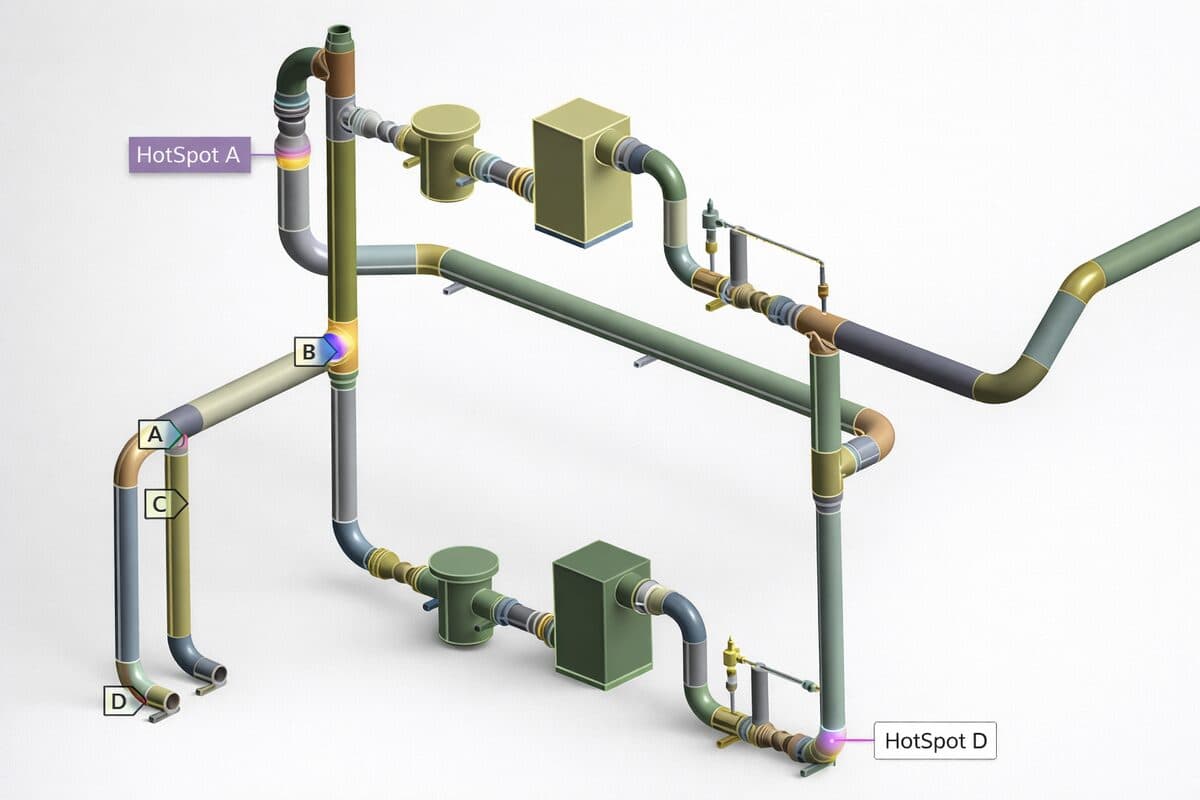
Offshore piping system with stress analysis hotspots
02

High-Performance Computing and Data Pipelines

Some engineering problems require large parametric studies, extensive simulation campaigns, or large-scale result processing. Numeric uses modern compute architectures to make those workflows practical.

Capabilities
  • CPU- and GPU-enabled simulation workflows
  • Efficient execution of large scenario sets
  • High-volume data processing and post-processing pipelines
  • Support for synthetic dataset generation
  • Computational frameworks that scale to practical engineering timelines
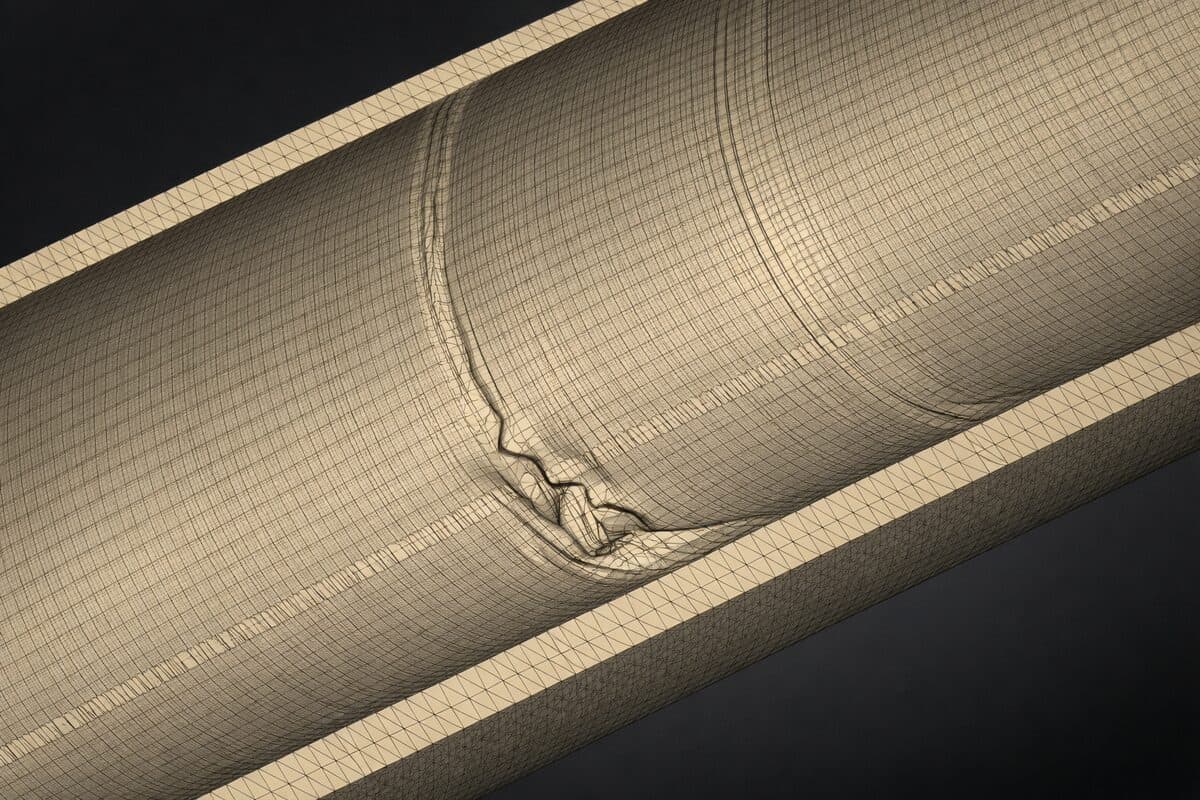
Finite element mesh of pipe structure
03

Transitioning Models into Operational Systems

High-fidelity engineering models provide detailed understanding of system behavior, but they are typically computationally intensive, disconnected from operational data, and unsuitable for real-time use. Numeric transforms these models into deployable computational systems by combining physics-based simulation, large-scale synthetic data generation, and reduced-order or machine learning representations derived from those simulations.

Capabilities
  • Embedded models functioning as operational system components
  • Integration with live operational data
  • Real-time estimation of system state
  • Continuous prediction of structural response
  • Integration of multiple data sources into a single engineering view
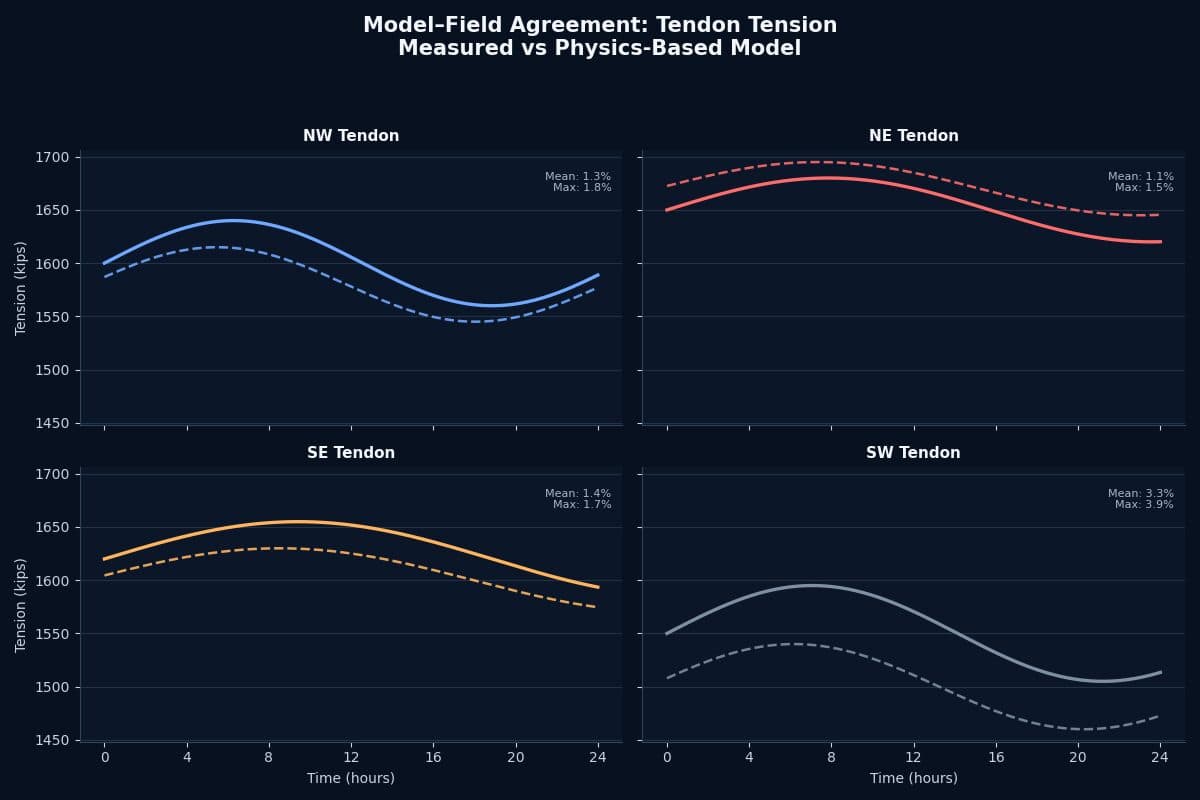
Top tension monitoring system visualization
04

Engineering Automation

A major part of Numeric’s capability is converting manual engineering work into structured and repeatable processes. This improves speed, traceability, and consistency while reducing the amount of routine effort required to execute complex analyses.

Capabilities
  • Automated model setup and scenario management
  • Structured engineering calculations and design checks
  • Automated extraction and interpretation of results
  • Repeatable workflows aligned with project-specific methodologies
Related Case Study

Simulation & Fatigue Monitoring

Predictive fatigue tracking through high-fidelity modeling

View Case Study

Intelligent Designs

Engineered for Real Conditions

Physics. Data. Deployment.

Contact us